


Course Details
Chemistry Grade 11-12
Chemistry Grade 11-12
This course emphasizes the mathematical, theoretical, and experimental basis of modern chemistry. Emphasis is placed on the use of theoretical and mathematical concepts to explain and predict chemical behavior. We
Why Choose Online Chemistry Grade 11-12 Classes?
Overview
Chemistry Grade 11-12 is senior-secondary Chemistry for the PCB / PCM / JEE / NEET / AP / IB / A-level stream. WinQuest delivers it 1:1 or in small groups aligned to your board - CBSE Class 11/12, ICSE ISC, Cambridge AS/A-level (9701), AP Chemistry, Australian v9.0 Senior Chemistry, or Singapore H2 Chemistry.
What You'll Learn
- Live interactive sessions
- 1st one-on-one session
- Comprehensive curriculum
- No long-term commitment
- Personalized learning plan
Grade 11
Atomic Structure & Periodic Properties+
- Quantum mechanical model of the atom - orbitals (s, p, d, f); quantum numbers (n, l, ml, ms); electron configuration.
- Periodic trends - atomic radius (decreases across period, increases down group), ionisation energy, electronegativity (Pauling scale).
- Photoelectron spectroscopy (PES) - measures binding energies of electrons; reveals shell structure and orbital energies.
Bonding & Molecular Structure+
- Ionic (metal + non-metal, electron transfer), covalent (electron sharing), and metallic bonding (sea of delocalised electrons).
- Lewis structures (electron dots), VSEPR (predict geometry: tetrahedral, trigonal, linear), hybridisation (sp, sp2, sp3).
- Intermolecular forces - London dispersion (weakest), dipole-dipole, hydrogen bonding (strongest non-bonded); affect MP, BP, solubility.
Stoichiometry & Reactions+
- Mole concept (1 mole = 6.022 x 10^23 particles; molar mass), empirical formula (simplest whole-number ratio) and molecular formula.
- Limiting reagents (reactant that runs out first; determines product amount) and percent yield (actual / theoretical x 100).
- Aqueous solutions (solute + solvent; molarity M = mol / L) and net ionic equations (showing only ions actually reacting).
Thermodynamics & Kinetics+
- Enthalpy (H, heat content), entropy (S, disorder), Gibbs free energy (G = H - TS; spontaneous if dG < 0).
- Reaction rate laws (rate = k[A]^m[B]^n; order; rate constant k) and mechanisms (elementary steps; rate-determining step).
- Activation energy (Ea; energy barrier) and catalysts (lower Ea by alternative pathway; not consumed).
Matter, Chemical Trends & Bonding+
- Atomic theory (Dalton, Thomson, Rutherford, Bohr, Schrödinger) and the periodic table (groups + periods; modern arrangement by atomic number).
- Periodic trends - atomic radius (decreases across period, increases down group), ionisation energy, electronegativity, electron affinity.
- Ionic bonding (metal + non-metal, complete electron transfer; ions, lattice) and covalent bonding (non-metals share electrons; sigma + pi bonds).
Chemical Reactions+
- Types of reactions - synthesis (A + B -> AB), decomposition (AB -> A + B), single displacement, double displacement, combustion, redox.
- Balancing equations (atoms conserved) and stoichiometry (mole ratios; mass-mass, mass-volume problems).
- Acids (donate H+; HCl, H2SO4), bases (accept H+ or release OH-; NaOH), and pH (-log[H+]; 0-14 scale; neutralisation).
Quantities in Chemical Reactions+
- Mole concept (1 mole = 6.022 x 10^23 particles; n = m/M) and calculations (mass-mole, mole-mole, mass-mass).
- Limiting reagents (which runs out first; calculated via mole ratios) and percent yield (actual / theoretical x 100).
- Solution chemistry - molarity (M = mol / L), dilution (M1V1 = M2V2), parts per million (ppm).
Solutions & Solubility+
- Concentrations (molarity, molality, mass %, mole fraction) and solubility (factors: temperature, pressure, polar / non-polar).
- Acid-base equilibria (Ka, Kb; weak acid / base dissociation; conjugate pairs); pH (-log[H+]) and pOH (-log[OH-]); pH + pOH = 14 at 25C.
- Titration calculations - moles acid = moles base at equivalence point; using known concentration to find unknown.
Properties & Structure of Matter+
- Atomic structure (nucleus with protons + neutrons; electrons in shells / orbitals) and the periodic table (groups, periods, blocks).
- Ions (positive: cations; negative: anions), ionic bonding (electron transfer; lattice), ionic compounds (NaCl, MgO).
- Covalent bonding (electron sharing between non-metals) and molecular shapes (VSEPR theory: linear, bent, trigonal, tetrahedral).
Reactions & Stoichiometry+
- Mole concept (1 mole = Avogadro number 6.022 x 10^23 particles) and chemical equations (balanced; conservation of mass).
- Stoichiometric calculations - mass-mole, mole-mass, mass-mass; mole ratios from balanced equations.
- Limiting reagents (reactant that runs out first; determines product amount) and yield (theoretical, actual, percent).
Acidic & Basic Solutions+
- Acids (sour, donate H+; HCl, citric), bases (bitter, accept H+; NaOH), and the pH scale (0-14; -log[H+]).
- Acid-base reactions (neutralisation: acid + base -> salt + water) and titration (find unknown concentration using known).
- Brønsted-Lowry theory - acids = proton (H+) donors; bases = proton acceptors; conjugate acid-base pairs.
Energy Transformations+
- Enthalpy (H, heat at constant pressure) and energy diagrams (reactants -> activated complex -> products; exo vs endo).
- Bond enthalpies (energy to break a bond; average values) and Hess's law (enthalpy change is path-independent; sum of steps).
- Calorimetry (measuring heat: q = mcdeltaT) using a calorimeter; specific heat capacity (J / g / C).
Some Basic Concepts & Atomic Structure+
- Mole concept (1 mole = 6.022 x 10^23 particles), molar mass (g/mol), atomic and molecular masses (in amu).
- Atomic models - Bohr (electrons in fixed orbits), Schrödinger (quantum mechanical; orbitals; probability clouds).
- Periodic table (18 groups, 7 periods, s/p/d/f blocks) and trends (atomic radius, ionisation energy, electronegativity).
Chemical Bonding & States of Matter+
- Ionic bonds (metal + non-metal), covalent bonds (electron sharing), coordinate bonds (both electrons from one atom).
- VSEPR (electron pair repulsion predicts shape), hybridisation (sp, sp2, sp3; mixing orbitals), molecular orbital theory (bonding, antibonding).
- Gas laws - Boyle's (PV = const), Charles's (V/T = const), Avogadro's (V/n = const); kinetic molecular theory.
Thermodynamics & Equilibrium+
- First law of thermodynamics (dU = q + w; energy conserved); enthalpy (H; dH = q at constant P).
- Chemical equilibrium - Kc (concentrations), Kp (partial pressures), Le Chatelier's principle (system opposes change).
- Ionic equilibrium - acids (Ka), bases (Kb), pH (-log[H+]); common ion effect; buffer solutions.
Organic Chemistry & Hydrocarbons+
- General principles (purification, qualitative + quantitative analysis) and techniques (distillation, recrystallisation, chromatography).
- Hydrocarbons - alkanes (CnH2n+2; saturated), alkenes (CnH2n; double bond), alkynes (CnH2n-2; triple bond), aromatics (benzene).
- Environmental chemistry (air, water, soil pollution; greenhouse effect; ozone depletion); redox reactions (oxidation: lose e-, reduction: gain e-).
Atomic Structure & Periodic Table+
- Atomic models - Dalton, Thomson, Rutherford, Bohr, Schrödinger (quantum mechanical with orbitals); quantum numbers.
- Electronic configuration - filling of orbitals (Aufbau principle, Pauli exclusion, Hund's rule); e.g., Na: 1s^2 2s^2 2p^6 3s^1.
- Periodic properties - atomic / ionic radius, ionisation energy, electron affinity, electronegativity; trends across period and group.
Bonding & States of Matter+
- Chemical bonding - ionic (electron transfer), covalent (sharing; sigma + pi), metallic (delocalised electron sea).
- Gas laws (Boyle's, Charles's, Avogadro's) and ideal gas equation (PV = nRT; R = 8.314 J / mol / K).
- Liquids (viscosity, surface tension, vapour pressure) and solids (crystalline vs amorphous; types of crystals).
Thermodynamics & Equilibrium+
- Thermochemistry - enthalpy (H), entropy (S, disorder), Gibbs free energy (G = H - TS; predicts spontaneity).
- Chemical equilibrium - dynamic state; Kc, Kp expressions; Le Chatelier's principle (system opposes change).
- Acid-base equilibria (Ka, Kb, pH, pOH; buffer solutions) and ionic equilibria (common ion effect, solubility product Ksp).
Organic & Environmental Chemistry+
- Organic chemistry - basics (carbon's tetravalency, catenation) and IUPAC nomenclature (root + suffix + prefix).
- Hydrocarbons - alkanes (CnH2n+2), alkenes (CnH2n with C=C), alkynes (CnH2n-2 with triple bond); reactions and uses.
- Environmental chemistry (atmospheric, water, soil pollution; greenhouse gases); redox (oxidation: lose e-, reduction: gain e-).
Atomic Structure & Bonding+
- Atomic structure (protons, neutrons, electrons; isotopes; mass spectrometry) and electron configuration (s, p, d, f orbitals).
- Periodic patterns and trends - atomic radius (decreases across period; increases down group), ionisation energy, electronegativity.
- Chemical bonding - covalent (electron sharing), ionic (transfer), metallic (sea); intermolecular forces (London, dipole, H-bond).
Stoichiometry & Energetics+
- Mole concept (1 mole = 6.022 x 10^23 particles) and chemical calculations (mass-mole, percent yield, limiting reagent).
- Energetics - enthalpy (dH for reactions), Hess's law (path-independent; calculate dH via known steps).
- Equilibria - Kc (concentrations) and Kp (partial pressures); position depends on conditions (Le Chatelier).
Organic Chemistry+
- Functional groups (-OH, -COOH, -CHO, -NH2, -X) and isomerism (structural: chain, position, functional; stereoisomerism).
- Hydrocarbons - alkanes (saturated; combustion, substitution) and alkenes (double bond; addition reactions).
- Halogenoalkanes (R-X; nucleophilic substitution: SN1, SN2; elimination), alcohols (-OH), and carbonyl compounds (-C=O).
Practical Skills+
- Quantitative experiments (precise measurements; significant figures; error analysis) and titration (acid-base; redox; complexometric).
- Qualitative analysis - tests for cations (flame tests, precipitation) and anions (chloride: AgNO3; sulphate: BaCl2; carbonate: HCl).
- AS Paper 3 practical exam practice - 2 hours; quantitative + qualitative tasks; lab safety; observations and conclusions.
Note+
- IGCSE 0620 Chemistry is sat at the end of Grade 10 / Year 11 in Cambridge schools.
- Cambridge AS-level (9701) Chemistry is taken in Grade 11 / Year 12 - half of full A-level qualification.
- See the Cambridge AS-level column above for the Grade 11 syllabus and exam structure.
Physical Chemistry I+
- Atomic structure (subatomic particles, isotopes, electronic configuration) and periodic table (s/p/d/f blocks, trends).
- Bonding (covalent, ionic, metallic) and intermolecular forces (van der Waals, hydrogen bonding; affect MP, BP, solubility).
- States of matter (solid, liquid, gas; phase diagrams); ideal gas equation (PV = nRT) and real gas deviations.
Inorganic Chemistry I+
- Periodicity - period 3 elements (Na to Ar); trends in properties (atomic radius, MP, BP, reactivity).
- Group 2 elements (Be, Mg, Ca, Sr, Ba; alkaline earth metals) and their compounds (oxides, hydroxides, carbonates).
- Group 17 halogens (F, Cl, Br, I; reactivity decreases down group; oxidising power; displacement reactions).
Organic Chemistry I+
- Isomerism (structural: chain, position, functional; stereoisomerism: cis/trans, optical) and reaction mechanisms (SN1, SN2, E1, E2).
- Hydrocarbons - alkanes (saturated; CnH2n+2), alkenes (C=C; CnH2n), arenes (benzene; delocalised pi electrons).
- Halogen derivatives (R-X) and alcohols (R-OH; primary, secondary, tertiary; oxidation reactions).
Practical Skills+
- Quantitative analysis - titration techniques (acid-base, redox, complexometric; using burette, pipette, conical flask).
- Qualitative analysis - cation tests (flame tests, NaOH, NH3) and anion tests (chloride, sulphate, carbonate).
- H2 Paper 4 practical exam practice - 2h30m; planning, analysis, evaluation; full lab skills assessment.
Grade 12
Equilibrium & Acid-Base+
- Acid-base equilibria - Ka (acid dissociation), Kb (base dissociation), Kw (water = 10^-14 at 25C; Ka x Kb = Kw).
- Buffer solutions (weak acid + conjugate base; resist pH change; Henderson-Hasselbalch: pH = pKa + log[A-]/[HA]) and titration curves (S-shape, equivalence point).
- Solubility product Ksp - equilibrium constant for sparingly soluble salts (AgCl, BaSO4); predicting precipitation.
Thermodynamics & Electrochem+
- Spontaneity (dG < 0; dG = dH - TdS); Gibbs free energy and its sign determines reaction direction.
- Electrochemical cells - voltaic (galvanic; spontaneous; chemical -> electrical; batteries) and electrolytic (non-spontaneous; electrical -> chemical).
- Nernst equation (E = E0 - (RT/nF) ln Q; cell potential at non-standard conditions) and electrolysis (Faraday's laws; calculating mass deposited).
Kinetics in Depth+
- Rate laws - differential (rate = k[A]^m[B]^n) and integrated forms (zero, first, second order; half-life t1/2).
- Reaction mechanisms (sequence of elementary steps) and intermediates (formed and consumed; not in overall equation); rate-determining step.
- Catalysis - homogeneous (same phase as reactants; H+ for ester hydrolysis) and heterogeneous (different phase; Pt for H2 / O2).
Applications - Organic+
- Organic functional groups (-OH, -COOH, -CHO, -CO-, -NH2, esters, amides) and their characteristic reactions.
- Polymerisation - addition (free radical; monomers add without loss; polyethene, PVC) and condensation (loss of small molecule; nylon, polyester).
- Biochemistry - amino acids (20 in proteins; zwitterions), proteins (peptide bonds; 4 levels of structure), carbohydrates (glucose, sucrose, starch).
Organic Chemistry+
- Hydrocarbons (alkanes, alkenes, alkynes, aromatics), alcohols (-OH), aldehydes (-CHO), ketones (R-CO-R'), carboxylic acids (-COOH).
- Esters (R-COO-R'; fragrances, fats), amines (R-NH2; basic), amides (R-CO-NH-R'; proteins), polymers (addition + condensation).
- Organic mechanisms - substitution (SN1, SN2), elimination (E1, E2), addition (electrophilic, nucleophilic); synthesis (multi-step routes).
Structure & Properties of Matter+
- Atomic orbitals (s, p, d, f shapes) and molecular orbital theory (bonding, antibonding; sigma, pi MOs; bond order).
- Intermolecular forces (London dispersion, dipole-dipole, hydrogen bonding) and properties (MP, BP, viscosity, surface tension).
- VSEPR (predicts geometry from electron pairs) and hybridisation in depth (sp, sp2, sp3, sp3d, sp3d2).
Energy Changes & Rates of Reaction+
- Thermochemistry (dH for reactions; standard enthalpy of formation, combustion, neutralisation) and Hess's law (path-independent).
- Reaction kinetics - rate equations (zero, first, second order); rate constant k; Arrhenius equation (k = Ae^(-Ea/RT)).
- Catalysis (lowers Ea via alternative pathway; not consumed; specific) and activation energy (Ea; minimum energy for reaction).
Equilibrium & Electrochemistry+
- Le Chatelier's principle (equilibrium shifts to oppose change) and Kc (equilibrium constant in concentrations); reaction quotient Q.
- Acid-base equilibria (Ka, Kb, Kw); pH calculations (strong acid / base; weak acid: pH = 1/2(pKa - log C)); buffer pH.
- Electrochemistry - voltaic cells (galvanic; chemical -> electrical; salt bridge; batteries) and electrolytic cells (electrical -> chemical; electroplating).
Equilibrium, Acids & Redox+
- Equilibrium - Le Chatelier (system opposes change) and Kc / Kp (constants for concentrations / partial pressures).
- Acid-base equilibrium (Ka for weak acids; Kb for weak bases) and pH (-log[H+]; buffer pH via Henderson-Hasselbalch).
- Redox reactions (oxidation: lose e-; reduction: gain) and electrochemistry (galvanic and electrolytic cells; Nernst equation).
Organic Chemistry & Polymers+
- Functional groups (-OH, -COOH, -NH2, -CHO, esters, amides) and their characteristic reactions (substitution, addition, oxidation).
- Polymerisation - addition (radical; polyethene, polystyrene) and condensation (loss of H2O; nylon, polyester, proteins).
- Biochemistry - proteins (peptide bonds; enzymes), carbohydrates (mono / di / polysaccharides), lipids (triglycerides, phospholipids).
Energy Storage & Conversion+
- Galvanic cells (spontaneous; chemical -> electrical) and electrolytic cells (non-spontaneous; electrical -> chemical; electroplating, refining).
- Fuel cells (continuous reactants; e.g., H2 + O2 -> H2O + electricity) and batteries (primary: alkaline; secondary: Li-ion).
- Reaction enthalpies - exothermic (dH < 0), endothermic (dH > 0); enthalpy of formation, combustion, neutralisation.
Analytical Methods+
- Spectroscopic methods - IR (functional group identification), NMR (1H, 13C: structure elucidation), MS (mass / charge ratio; molecular formula).
- Chromatographic methods - GC (gas-liquid; volatile compounds), HPLC (high-performance liquid; non-volatile, sensitive).
- Quantitative analysis (titration, gravimetric, instrumental) and qualitative analysis (tests for cations, anions, functional groups).
Solid State & Solutions+
- Solid state - types of crystals (ionic, covalent network, molecular, metallic), defects (Frenkel, Schottky), unit cells.
- Solutions - concentrations (M, m, x), colligative properties (vapour pressure, BP elevation, FP depression, osmotic pressure).
- Electrochemistry - cells (galvanic, electrolytic; EMF), Nernst equation (E = E0 - (RT/nF) ln Q), Kohlrausch (molar conductivity).
Chemical Kinetics & Surface Chem+
- Chemical kinetics - rate laws (rate = k[A]^m[B]^n), order of reaction (sum of exponents), half-life (t1/2; depends on order).
- Surface chemistry - adsorption (physisorption, chemisorption), catalysis (heterogeneous, homogeneous, enzymes), colloids (Tyndall effect).
- General principles of metallurgy - extraction (concentration, reduction, refining); thermodynamic + electrochemical principles.
p, d, f-block & Coord. Compounds+
- p-block elements - Group 13 (B, Al), Group 14 (C, Si), Group 15 (N, P), Group 16 (O, S), Group 17 (halogens), Group 18 (noble gases).
- d-block elements (transition metals; variable oxidation states; coloured ions; catalytic activity) and f-block (lanthanides, actinides).
- Coordination compounds - Werner's theory (primary + secondary valence; central metal + ligands), isomerism (geometric, optical).
Organic Chemistry - All+
- Haloalkanes (R-X; SN1, SN2 mechanisms) and haloarenes (Ar-X; resonance stabilised; less reactive than haloalkanes).
- Alcohols (R-OH; primary, secondary, tertiary), phenols (Ar-OH; acidic), ethers (R-O-R'); aldehydes (-CHO), ketones (R-CO-R'), carboxylic acids (-COOH).
- Amines (R-NH2; primary, secondary, tertiary; basic); biomolecules - carbohydrates (glucose, sucrose), proteins (peptide bonds), nucleic acids (DNA, RNA).
Physical Chemistry+
- Solid state (types of crystals, defects, unit cells), solutions (colligative properties), electrochemistry (Nernst, electrolysis).
- Chemical kinetics (rate laws, order, Arrhenius) and surface chemistry (adsorption, catalysis, colloids).
- General principles of metallurgy - extraction (concentration, reduction, refining); thermodynamics of extraction.
Inorganic Chemistry+
- p-block elements (Groups 13-18; properties, compounds, uses); d-block (transition metals) and f-block (lanthanides, actinides).
- Coordination compounds - central metal + ligands; nomenclature, isomerism, bonding (VBT, CFT, MOT).
- Qualitative analysis of inorganic salts - identifying cations (Pb2+, Cu2+, Fe3+ etc.) and anions (Cl-, SO4^2-, NO3-).
Organic Chemistry+
- Haloalkanes (R-X; nucleophilic substitution SN1, SN2; elimination) and haloarenes (Ar-X; less reactive due to resonance).
- Alcohols (R-OH), phenols (Ar-OH; acidic), ethers (R-O-R'); aldehydes (-CHO), ketones (R-CO-R'), carboxylic acids (-COOH).
- Amines (R-NH2; basicity) and biomolecules (carbohydrates: mono/di/poly; proteins: peptide bonds; nucleic acids: DNA/RNA).
Practical+
- Volumetric analysis (using burette, pipette, conical flask) and titrations (acid-base, redox, complexometric).
- Qualitative analysis of inorganic salts - cation tests (flame, NaOH, NH3) and anion tests (Cl-, SO4^2-, CO3^2-).
- ISC practical exam preparation - 3 hours; volumetric + qualitative analysis; lab safety; observations and conclusions.
Physical Chemistry+
- Chemical energetics - lattice enthalpy (energy to break ionic lattice into gas-phase ions), Born-Haber cycle (calculate lattice enthalpy).
- Equilibria - acids (Ka), bases (Kb), buffers (Henderson-Hasselbalch; pH = pKa + log[A-]/[HA]), Ksp (solubility product).
- Reaction kinetics - mechanisms (sequence of elementary steps) and orders (zero, first, second; rate equations).
Inorganic Chemistry+
- Periodicity - period 3 elements (Na to Ar); oxides (basic vs acidic; trend down the period).
- Group 2 elements (Be, Mg, Ca, Sr, Ba; reactivity increases down group) and Group 17 (halogens; reactivity decreases down group).
- Transition elements - chemistry of complexes (d-block; variable oxidation states; ligands; coloured ions; catalysts).
Organic Chemistry+
- Hydrocarbons (alkanes, alkenes, arenes; benzene resonance) and halogen derivatives (R-X; SN1, SN2, E1, E2 mechanisms).
- Hydroxy compounds (alcohols R-OH, phenols Ar-OH), carbonyl compounds (aldehydes RCHO, ketones R-CO-R'), carboxylic acids (R-COOH).
- Nitrogen compounds (amines, amides, nitriles), polymers (addition, condensation), spectroscopy (IR, NMR, MS for structure elucidation).
Past Paper Practice+
- 4 Paper 4 (theory; 2 hours; 100 marks) and Paper 5 (planning + analysis + evaluation; 1h15m; 30 marks) mocks.
- A* targeting (>= 90%); time management (90 min / paper); precise answers with units, sig figs, balanced equations.
- May / October session preparation - past papers from 5+ years; examiner reports; common mistakes.
Note+
- IGCSE 0620 Chemistry is sat at the end of Grade 10 / Year 11 in Cambridge schools.
- Cambridge A-level (9701) Chemistry is taken in Grade 12 / Year 13 - full A-level qualification (AS + A2 papers).
- See the Cambridge A-level column above for the Grade 12 syllabus and exam structure.
Physical Chemistry II+
- Chemical energetics II - lattice energy, Born-Haber
- Reaction kinetics - mechanisms and rate orders
- Equilibria - ionic equilibria, buffers, Ksp
Inorganic Chemistry II+
- Periodicity - chemistry of period 3
- Transition elements and complexes
- Group 2 and Group 17 chemistry
Organic Chemistry II+
- Carbonyl compounds, carboxylic acids and derivatives
- Nitrogen-containing compounds
- Polymerisation and biochemistry
Exam Preparation+
- TYS past papers
- Paper 1 (MCQ), Paper 2 (structured), Paper 3 (essay), Paper 4 (practical)
- A-grade target writing
Requirements
- A laptop or desktop with stable internet
- Scientific calculator
- Notebook for equations, mechanisms, lab reports
- School Chemistry textbook + past papers
Reviews
4.84 / 5 ★ · 300+ students enrolled
Parents consistently rate our mentors for personalised attention, clear concepts and steady progress. Book a free demo to experience a class first-hand.
Frequently Asked Questions
How do I get started?+
Click the Book a Demo button on this page and fill in your child's grade and school board (CBSE / ICSE / IGCSE / Cambridge / US Common Core / Singapore MOE etc.). We will schedule a free trial session with a matching tutor. For details, contact our coordinator on WhatsApp at +91 93308 11581 or email contact@winquestonline.com.
Will the tutor follow my child's school board?+
Yes. Every WinQuest tutor is mapped to specific curricula. Before the first class we ask which board your child follows; the tutor uses that board's scope and sequence, supports the school textbook chapter by chapter, and adds worksheets in the board's exam style. We currently support US Common Core, Ontario, Australian v9.0, CBSE (NCERT), ICSE (CISCE), IGCSE 0580 / 0500 / 0610 / 0620 / 0625, Cambridge Primary / Lower Secondary, and Singapore MOE.
How does payment work?+
We require monthly advance payments for the number of classes scheduled in that calendar month. We accept Zelle, PayPal, UPI (for India), Stripe and major credit / debit cards. You can select your preferred payment method during the initial enrolment.
What if my child misses a class?+
For 1:1 sessions we reschedule a make-up at a mutually convenient time at no extra cost (with at least 24 hours notice). For group classes we share a timed recording of the session on parent request, so your child can catch up before the next class.
How long is each class?+
Each class session is 60 minutes long for academic subjects. Frequency is typically twice a week for K-7 grades and 2-3 times a week for high school, based on the board exam timeline and parent preference.
How is progress measured?+
Tutors give written feedback on every homework assignment, run a short formative quiz every 4-6 classes, and a longer chapter test at the end of each topic. Parents receive a monthly progress report covering concept mastery, homework completion and test scores.
What is the class size?+
For 1:1 sessions the class is just your child and the tutor. For group classes we cap each batch at 6-8 students so every learner gets individual attention and can ask questions in real time.
Are the tutors qualified?+
All our tutors are highly qualified subject-matter experts with proven track records - many hold Master's degrees in their subject and several years of school-curriculum teaching experience. Each tutor is interviewed by our academic head before joining and is mapped to specific boards and grades.
What if my child needs to pause for a school break or exam?+
Just let us know in advance. There are no contracts - you can pause for a school holiday or final-exam stretch and resume when the student is ready, with no penalty.
What are the requirements?+
A laptop or desktop with a stable internet connection is required. Pencil, eraser, ruler and a notebook for working out solved problems. For higher grades a basic calculator. The tutor will list any board-specific requirements (textbook, geometry box, etc.) before the first class.
Student Reviews
No reviews yet — be the first to share your experience with this course!
Meet our Teachers
Expert educators who connect, guide, and prepare students with special personalized care ❤️📚✨












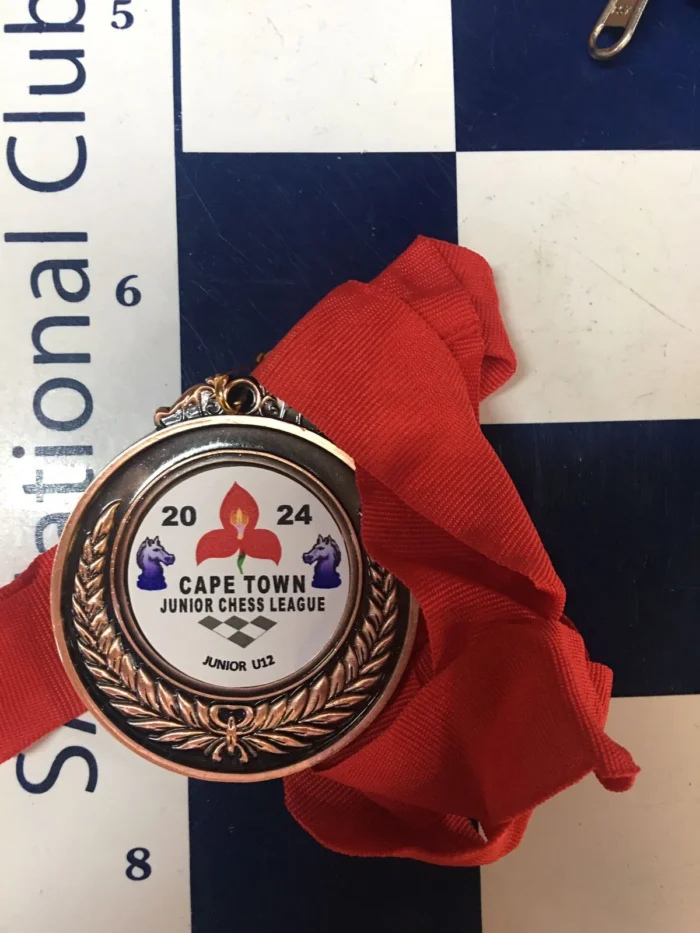
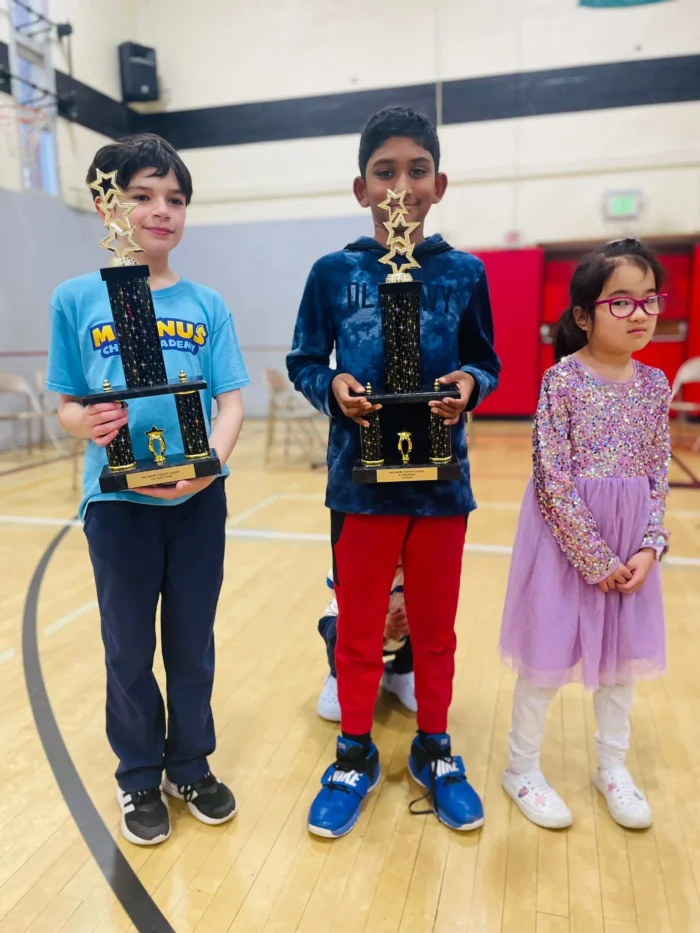
Student Achievements
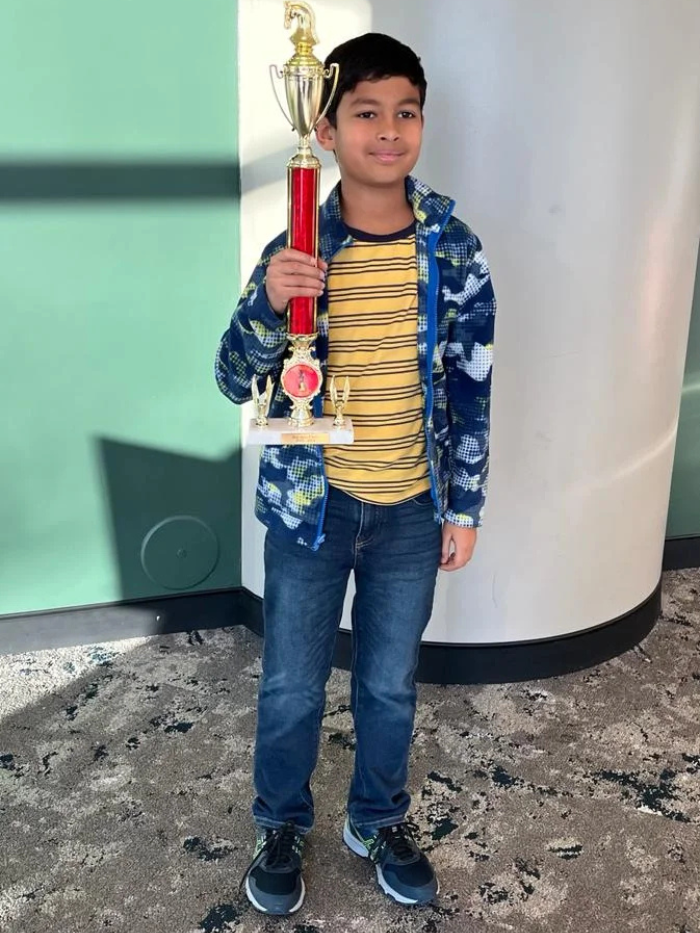
Making an Impact: 🏆 Student Achievements That Shine | 🌱 Your Growth. Our Mission.

What Our Parents Say About Us
👪 Real Results. Real Parent Voices. 🏆 Futures Built with Care



Parent Testimonials
Success Stories That Speak 🌟🎓 Wins That Inspire Pride 🏆
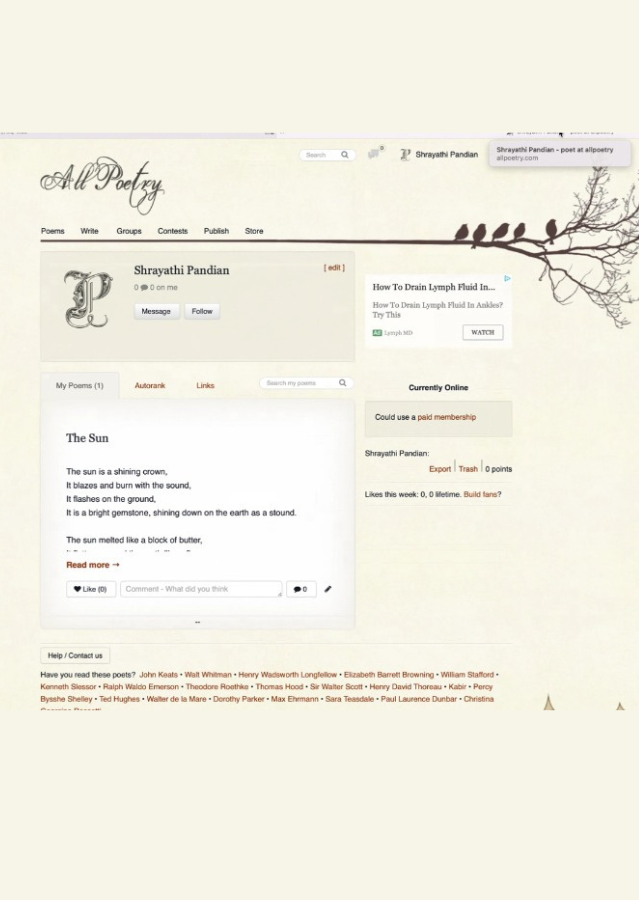
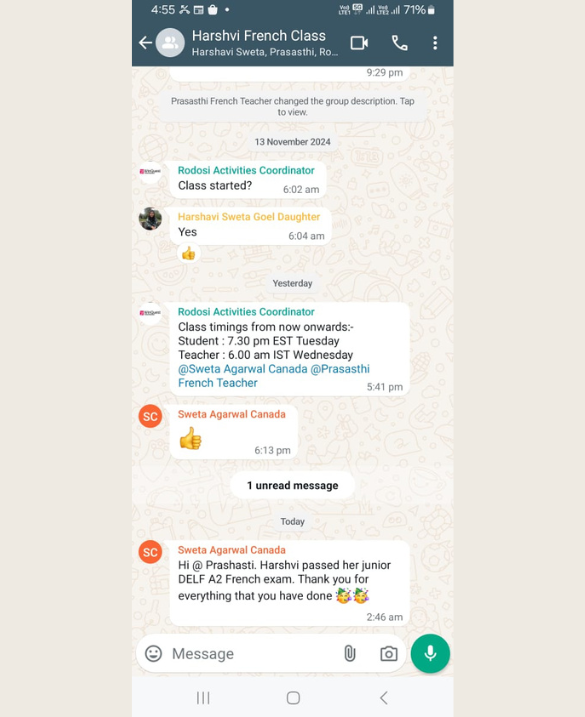
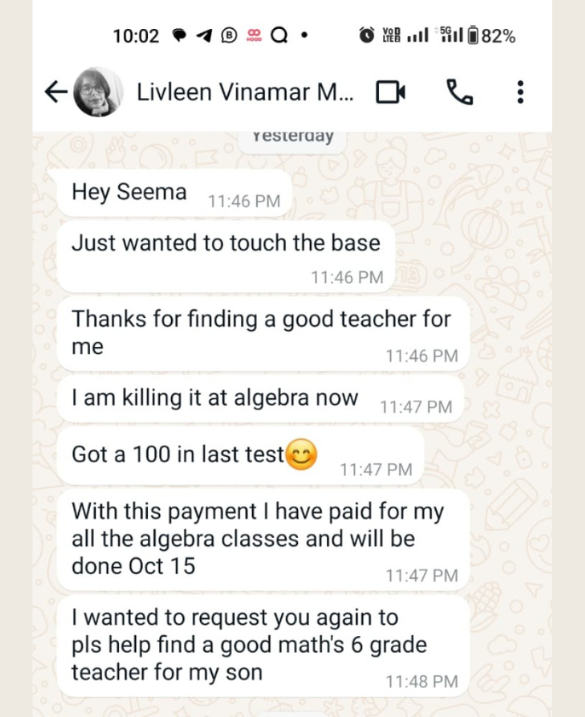
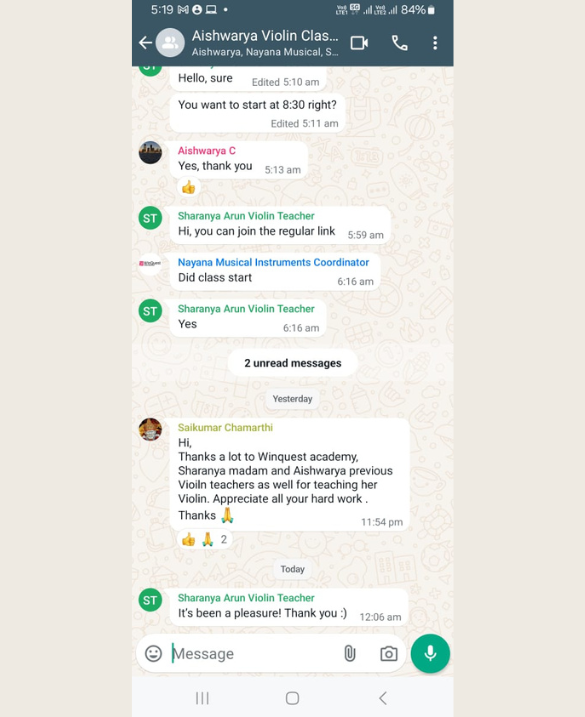
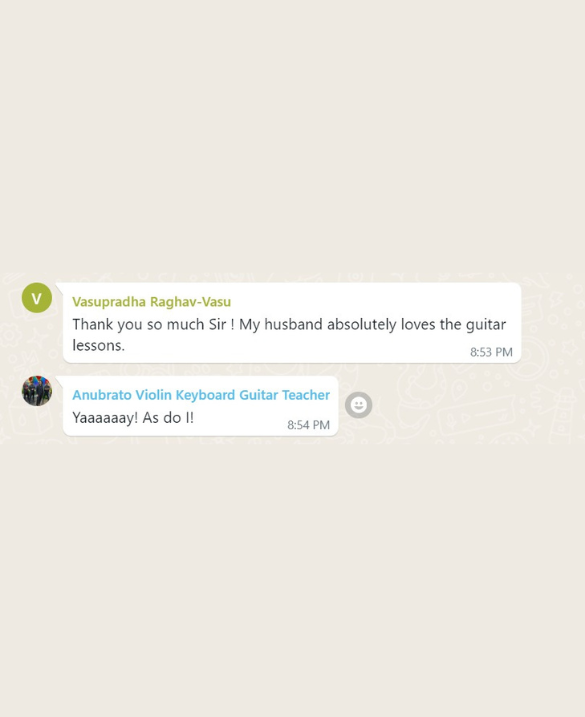
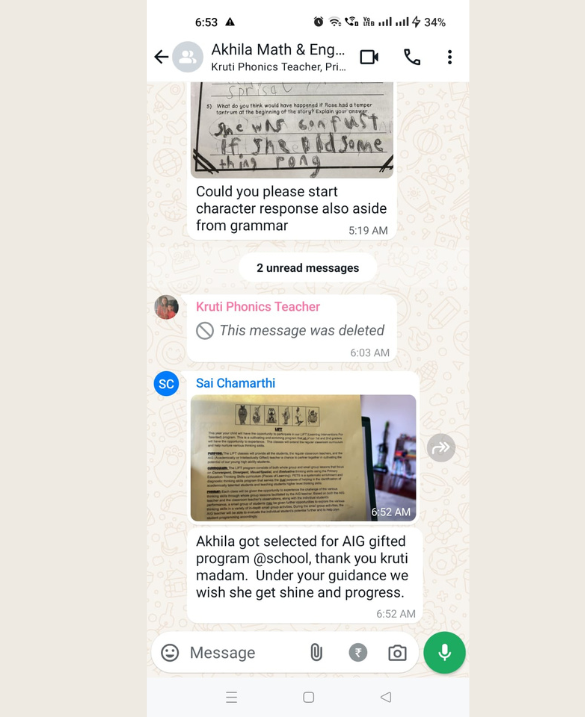
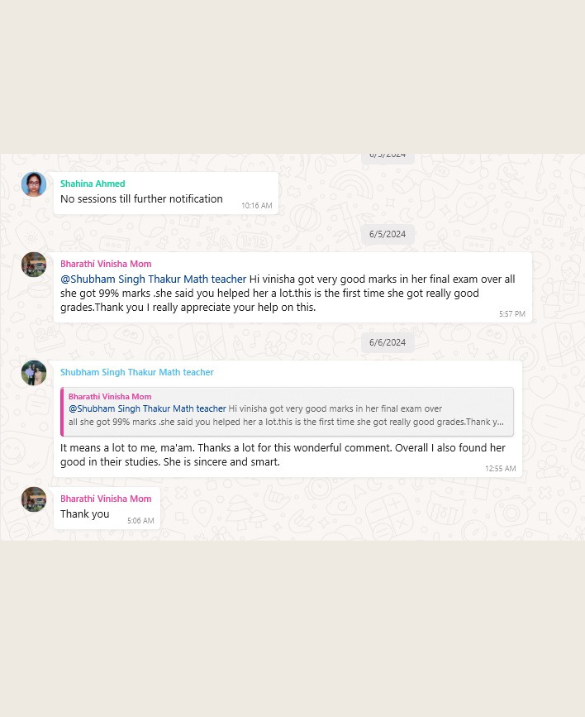
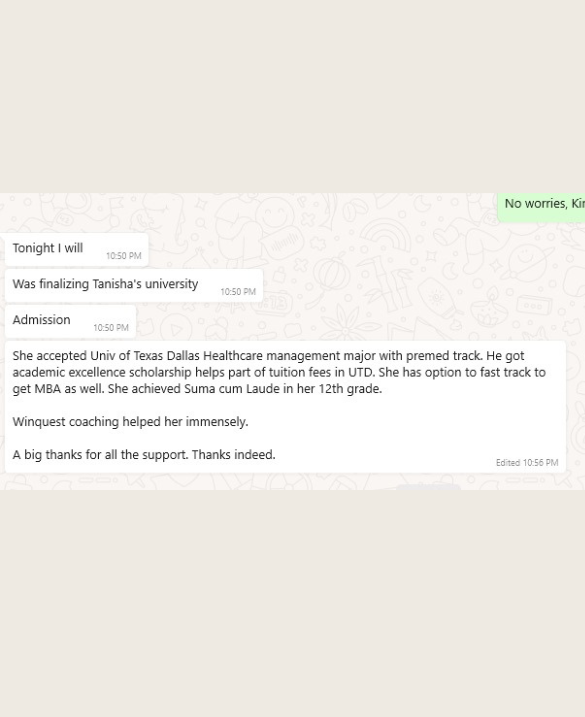
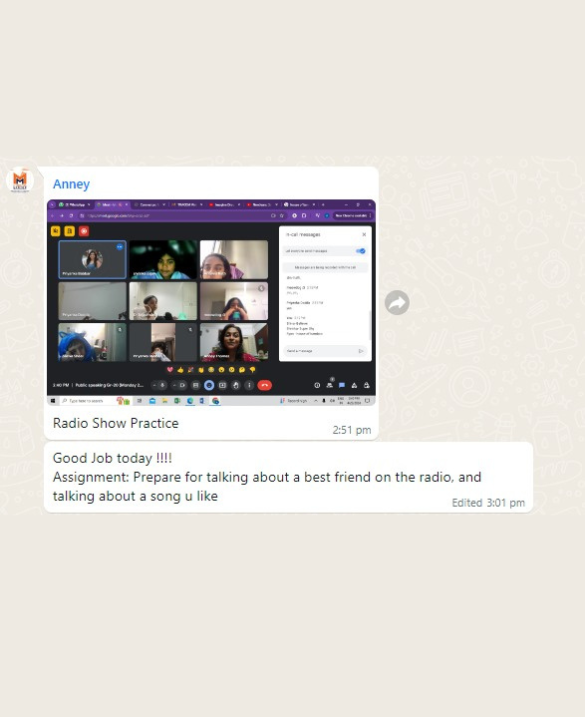
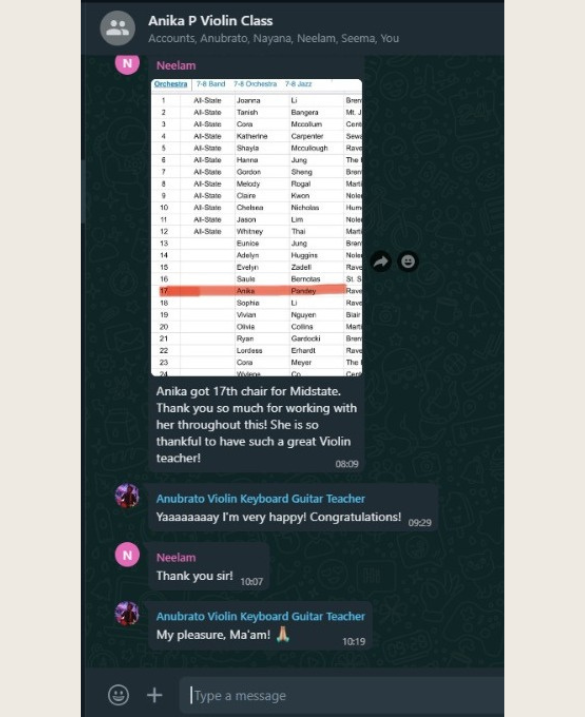
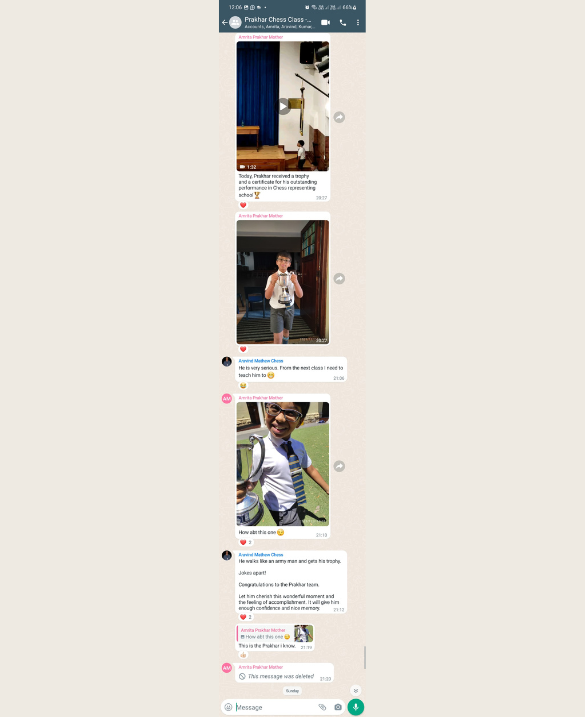
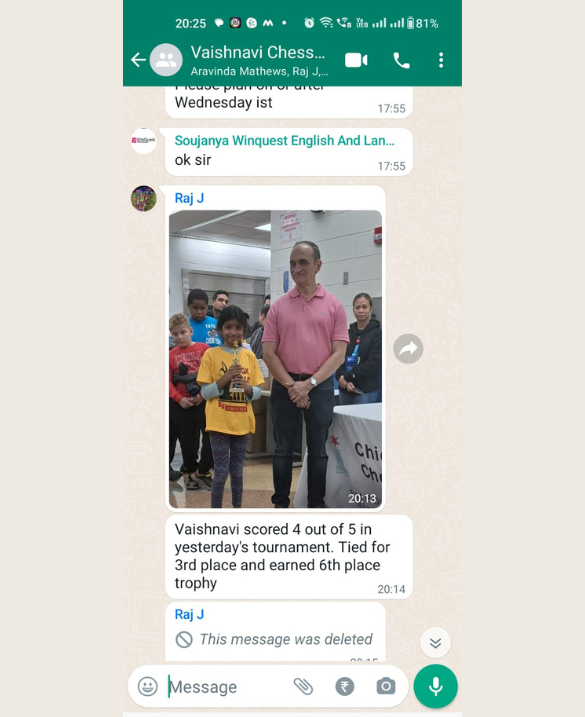
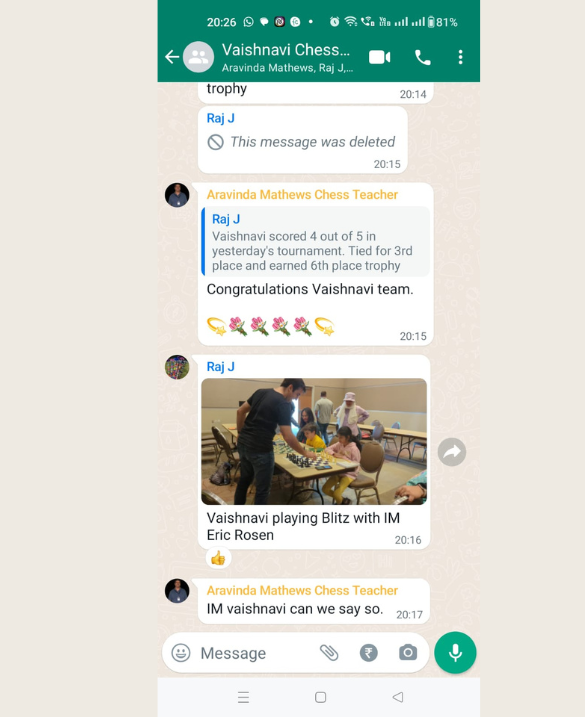
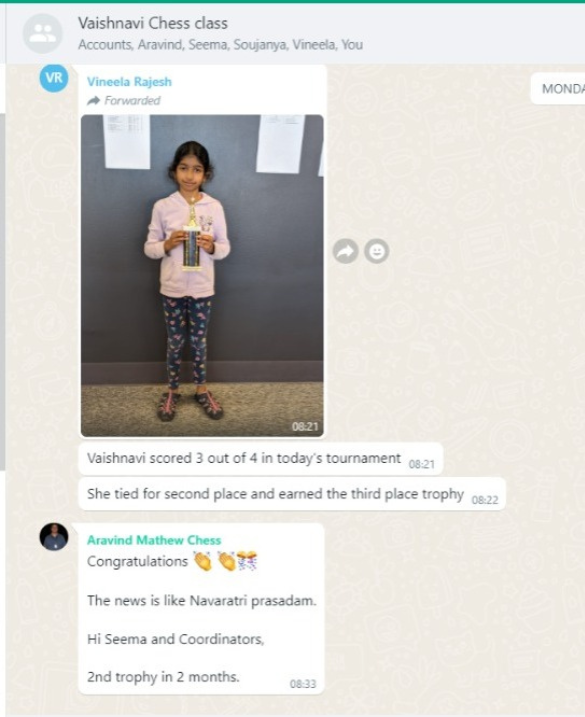
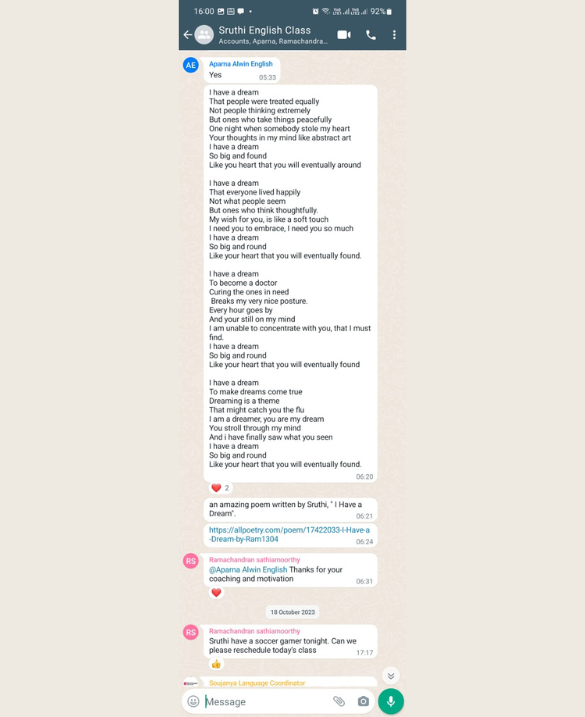
WhatsApp Testimonials
Real Voices from Our WhatsApp Community 💚📚
Latest News and Resources
📰 Learning Updates | 📘 Tips | 🎓 Resources | 💻 Online Courses