

Course Details
Social Studies Grade 11-12
Social Studies Grade 11-12
Why Choose Online Social Studies Grade 11-12 Classes?
Overview
Social Studies Grade 11-12 (Humanities stream) - History, Geography, Political Science, Sociology - aligned to the senior-secondary board: AP US / World / European History track, CBSE Humanities (History, Geography, Polity, Sociology, Psychology), ISC Humanities, A-level History (9489) / Geography (9696), Cambridge AS / A-level, or Singapore H2 History / Geography / Sociology.
What You'll Learn
- Live interactive sessions
- 1st one-on-one session
- Comprehensive curriculum
- No long-term commitment
- Personalized learning plan
Grade 11
AP US History Periods 1-5+
- Period 1 (1491-1607): Early encounters - Columbian Exchange, Native societies, Spanish + French colonisation, slave trade origins.
- Period 2-3 (1607-1800): Colonial to Revolution - 13 colonies, Great Awakening, French + Indian War, Declaration 1776, Constitution 1787.
- Period 4-5 (1800-1877): Early Republic to Reconstruction - Louisiana Purchase 1803, Manifest Destiny, Civil War 1861-65, 13/14/15th Amendments.
AP World History Periods 1-3+
- Foundations c.8000 BCE to 600 CE - Neolithic Revolution, river civilisations (Mesopotamia, Egypt, Indus, China), Classical empires (Persia, Greece, Rome, Han, Maurya).
- 600 CE to 1450 - regional civilisations - Islamic Caliphates, Tang/Song China, Byzantine, Carolingian, Mongol Empire, Mesoamerican states.
- 1450 to 1750 - global interactions - Age of Exploration (Columbus 1492), Columbian Exchange, Atlantic slave trade, Mughal + Ottoman + Ming/Qing.
Essay Skills+
- DBQ - Document-Based Question (60 min; 7 documents; defend thesis with evidence + contextualisation + outside knowledge).
- Long Essay Question (LEQ) - 40 min; choose 1 of 3; thesis + evidence + analysis + synthesis (with historical complexity).
- Short Answer Question (SAQ) - 4 SAQs in 40 min; ABC format (Answer the question + Back it up + Connect or Cite evidence).
World History to 1500+
- Ancient and medieval world - Mesopotamia, Egypt, Greece, Rome; medieval Europe + Islamic world; East Asia; sub-Saharan Africa.
- Rise of major civilisations - shared characteristics (writing, agriculture, urbanisation, religion, hierarchy); divergent paths.
- Encounters and exchanges - silk roads, trans-Saharan trade, Mediterranean networks; goods, ideas, religions, diseases.
World History 1500-Present+
- Age of revolutions (1750-1850) - American 1776, French 1789, Haitian 1791-1804, Latin American independence movements.
- Industrial age and imperialism - Industrial Revolution (Britain 1760s+), scramble for Africa 1880s-90s, "New Imperialism".
- Modern world history - WWI + WWII, decolonisation, Cold War, post-1989 unipolar world, rise of China + India.
Human Geography+
- Population (8 billion; demographic transition model) and migration (push-pull; refugees; remittances).
- Urbanisation (55% world urban; megacities Tokyo, Delhi, Shanghai) and globalisation (post-1990 boom; WTO, NAFTA).
- Sustainability (3 Es: economy, environment, equity) and global issues (climate, water, biodiversity, inequality).
Modern History Y11+
- Modern World and Australia - Australia's role in WWI, WWII, post-war migration, Cold War alliance with US (ANZUS).
- Movements and ideas - feminism, civil rights, environmentalism, decolonisation; major 20th-century philosophical shifts.
- Significant events and people - WWI, WWII, Russian + Chinese Revolutions; Hitler, Stalin, Mao, Gandhi, Churchill, FDR.
Geography Y11+
- Natural and ecological hazards - tectonic (earthquakes, volcanoes, tsunamis), meteorological (cyclones, floods, droughts, bushfires).
- Global biophysical interactions - atmosphere, hydrosphere, lithosphere, biosphere; feedback loops; climate system.
- Sustainable land use - sustainable agriculture, urban planning, conservation; SDGs; carbon budgets.
Skills+
- Source analysis (origin, motive, audience) and contextualisation (placing source within historical context).
- Essay structure - introduction with thesis, body with PEEL paragraphs, conclusion; argument with evidence.
- Independent research project - choose topic, formulate question, gather + analyse evidence, present findings.
History - Themes in World History+
- From the beginning of time (3.6 BYA Earth; hominids 7 MYA; agriculture 10,000 BCE); early societies (Neolithic Revolution; first cities).
- Empires - Mesopotamia (Sumer, Babylon, Assyrian), Roman (753 BCE - 476 CE), Islamic (Umayyad, Abbasid Caliphates 661-1258).
- Changing traditions - Renaissance (14th-17th c. Italy; humanism; da Vinci, Michelangelo), Reformation (Luther 1517; Calvin; Counter-Reformation).
Geography - Fundamentals of Physical Geo+
- Geography as a discipline (physical + human + environmental); the Earth (origin, structure, motions, geological time).
- Landforms (plate tectonics; weathering; erosion; deposition; mountains, plateaus, plains); climate (Koppen classification; climate change).
- Water and life on Earth - hydrological cycle, oceans, rivers, groundwater; biosphere; ecosystems; biodiversity.
Political Science+
- Constitution (1950) and political theory (liberalism, socialism, Marxism, Gandhism); fundamental concepts of politics.
- Indian Constitution at work - 3 organs (legislature, executive, judiciary); federalism; emergency provisions.
- Election and representation - FPTP system, EC of India, political parties, electoral reforms (NOTA, VVPAT).
Sociology / Psychology / Economics+
- Introducing Sociology (study of society; key thinkers: Comte, Durkheim, Weber, Marx) / Psychology (Wundt 1879; Freud, Piaget; perception, learning, memory).
- Indian Society - basic structure (caste, class, gender, region, religion; village + urban; family + kinship).
- Macroeconomics - introduction (GDP, GNP, NNP, NDP; circular flow of income; aggregate demand + supply).
History+
- India in mid-18th century - decline of Mughals (Aurangzeb death 1707); successor states (Bengal, Awadh, Hyderabad); Maratha confederacy.
- Establishment of British rule - EIC arrives 1600; Plassey 1757; Buxar 1764; Diwani 1765; Subsidiary Alliance; Doctrine of Lapse.
- Revolt of 1857 (Sepoy Mutiny) and its aftermath - causes (cartridges, annexation, religious); Crown takes over 1858; reorganisation.
Geography+
- Physical geography - landforms (plate tectonics, weathering, erosion), climate (Koppen; Indian monsoon).
- Atmosphere (78% N2, 21% O2; 5 layers: troposphere to exosphere) and hydrosphere (97% saltwater, 3% freshwater).
- Biosphere (zone of life) and natural resources (renewable + non-renewable; sustainable management).
Political Science+
- Constitution of India - features (longest written, parliamentary, federal with unitary bias, secular, socialist, sovereign democratic republic).
- Fundamental rights (Part III; 6 rights: Equality, Freedom, Against Exploitation, Religion, Cultural, Constitutional Remedies) and directive principles (Part IV).
- Union government (Parliament: LS 543 + RS 245; PM + Council of Ministers) and state governments (Vidhan Sabha + Vidhan Parishad; CM).
Economics / Sociology / Psychology (Choice)+
- Macroeconomics - introduction (GDP, GNP, NNP, NDP; aggregate demand + supply; circular flow).
- Indian society and social institutions - caste, class, family, kinship; village + urban; tribal society.
- Foundations of psychology - schools of psychology (structuralism, functionalism, behaviourism, cognitivism, humanistic); methods of inquiry.
AS History 9489+
- European option - Liberalism + Nationalism in Italy (Cavour, Garibaldi, 1870 unification) and Germany (Bismarck, Franco-Prussian War 1870-71, 1871 unification).
- American option - Civil War (1861-65) and Reconstruction (1865-77; 13/14/15th Amendments; Freedmen's Bureau; rise of Jim Crow).
- International option - international relations 1871-1945 (alliances, WWI, Treaty of Versailles, League of Nations, WWII).
AS Geography 9696+
- Hydrology (water cycle; runoff; infiltration) and fluvial geomorphology (river processes: erosion, transport, deposition; landforms).
- Atmosphere (5 layers) and weather (depressions, anticyclones, fronts); meteorological data + maps.
- Rocks (igneous, sedimentary, metamorphic) and weathering (physical, chemical, biological); population dynamics (DTM).
Skills+
- Source-based questions - reliability (who, when, why), utility (use for historical understanding), comparison of sources.
- Essay structure - thesis (clear argument), evidence (named examples, data), evaluation (weighing different views).
- Past paper practice - 5 years of papers (May / Oct sessions); mark scheme calibration; A* targeting.
Note+
- IGCSE Humanities (0470 History / 0460 Geography / 0457 Global Perspectives) are sat at the end of Grade 10 / 11.
- Cambridge AS-level (9489 History / 9696 Geography) is taken in Grade 11 / Year 12 - half of full A-level.
- See the Cambridge AS-level column above for the Grade 11 syllabus and exam structure.
H2 History+
- Shaping the international order (1945-2000) - emergence of bipolar world; UN, IMF, World Bank; decolonisation.
- Cold War in Asia (Korea 1950-53, Vietnam 1955-75), Africa (Angola, Mozambique), Latin America (Cuba 1959, Chile 1973).
- Source-based case study skills - 4-6 sources; inference, reliability, comparison, evaluation under exam time.
H2 Geography+
- Tropical environments - climate (rainforest, savanna, monsoon), soils (lateritic), biodiversity, deforestation.
- Development, economy and environment - case studies of Singapore, China, India; export-led vs import-substitution; resource curse.
- Sustainable development (SDGs 2015; balance of 3 Es) - cities, agriculture, energy, water management.
Skills+
- Source-based questions - inference, reliability (provenance, content, context), comparison, drawing conclusions.
- Essay structure for 25-mark questions - introduction, body paragraphs with PEEL, conclusion with judgement.
- Past paper practice - 5 years of TYS; mark scheme calibration; A-grade targeting.
Grade 12
AP US History Periods 6-9+
- Period 6-7 (1865-1945): Industrial America to WWII - Gilded Age, Progressive Era, WWI, Roaring 20s, Great Depression, FDR's New Deal.
- Period 8 (1945-1980): Cold War America - containment, McCarthyism, Civil Rights Movement, Vietnam War, social transformation.
- Period 9 (1980-Present): Modern America - Reagan era, end of Cold War, 9/11 + War on Terror, 2008 financial crisis, Obama, Trump, Biden.
AP World History Periods 4-6+
- 1750-1900 - revolutions (American, French, Haitian, Industrial) and reform (abolition of slavery, women's suffrage, labour movements).
- 1900-Present - global conflicts (WWI, WWII, Cold War, War on Terror) and changes (decolonisation, globalisation, digital age).
- Modern world challenges - climate change, inequality, demographic shifts, AI / automation, geopolitical realignment.
AP Exam Strategy+
- Full DBQ practice - 7 documents; 60 min; thesis + contextualisation + evidence (4 docs min) + complexity / synthesis.
- Full LEQ practice (40 min; choose 1 of 3; thesis + evidence + analysis); 2 full mocks under exam conditions.
- Mark-scheme analysis - 7-point DBQ rubric, 6-point LEQ rubric; pacing and exam strategy.
World History since 1500 - Western+
- Renaissance (14th-17th c. Italy; humanism; da Vinci, Michelangelo, Erasmus) and Reformation (Luther 1517 95 Theses; Calvin; Counter-Reformation).
- Revolutions - Scientific (Copernicus, Galileo, Newton 16th-17th c.), French (1789), Industrial (Britain 1760-1840; later in Europe + US).
- World wars (WWI 1914-18, WWII 1939-45; total wars; mass casualties) and Cold War (1947-91; superpower rivalry; proxy conflicts).
World Issues - Geographic Analysis+
- Global issues - climate change (IPCC reports; Paris Agreement 2015), food (8B humans, food security, SDG 2), water (1.7B without safe access).
- Patterns of human activity - global migration, urbanisation (55% world urban), economic flows (trade, FDI, remittances).
- Sustainability and the future - circular economy, renewable energy transition, sustainable cities, doughnut economics model.
Independent Study (ISU)+
- Research and historical investigation - select topic, pose question, gather primary + secondary sources, evaluate.
- Source analysis (origin, purpose, content, value, limitations) and citation (Chicago / Turabian or MLA / APA).
- Written essay (2500+ words) or presentation - thesis-driven, with evidence and analysis; demonstrate independent research.
Modern History Y12+
- National studies - Russia (1917 revolutions, Stalin) / Germany (Weimar, Nazism) / China (Mao, Cultural Revolution) / India / Indonesia (Suharto).
- International studies - WWI (1914-18) / WWII (1939-45) / Cold War (1947-91; key events: Cuban Missile Crisis, Vietnam, fall of USSR).
- Independent historical inquiry - 2500-3000 word research essay; assess sources, frame historical question, form judgement.
Geography Y12+
- Land cover transformations - deforestation (Amazon, SE Asia), urbanisation, desertification, glacier retreat.
- Global economic activity - GDP, trade flows, FDI, remittances, MNCs, global value chains.
- Planning sustainable places - 15-minute cities, transit-oriented development, green infrastructure, mixed land use.
Exam Preparation+
- Source analysis (origin, motive, audience, context, content) and essay writing (thesis + body + conclusion).
- Past paper practice - 5 years of VCE / HSC / WACE / QCE papers; mark scheme analysis.
- ATAR rank targeting - top 10% / top 5% strategies; precise analysis, balanced argument, specific evidence.
History - Themes in Indian History+
- Bricks, beads and bones - Harappan civilisation (2600-1900 BCE; Mohenjo-Daro, Harappa; town planning; trade with Mesopotamia).
- Kings, farmers and towns - early states (Mahajanapadas 600-300 BCE; Mauryan 322-185 BCE: Chandragupta, Ashoka).
- Bhakti-Sufi traditions (medieval India); colonial cities (Calcutta, Bombay, Madras); rebels (1857) and the Raj; framing the Constitution (1946-50).
Geography - India: People & Economy+
- Human geography - nature (study of people-environment relationship) and scope (population, settlement, economy, culture).
- World population - distribution (uneven; dense in S Asia, E Asia, Europe; sparse in deserts, polar regions) and density.
- Migration; population composition (age, sex, occupation); HDI; primary (agriculture), secondary (manufacturing), tertiary (services) activities; international trade; geographical perspective on selected issues.
Political Science+
- Cold War era (1947-91); rise and fall of bipolar world (USA-USSR rivalry; superpower proxy conflicts).
- US hegemony (post-1991 unipolar moment); alternative centres of power (EU, China, India, Russia, Japan).
- South Asia (India, Pakistan, Bangladesh, Nepal, Sri Lanka) and contemporary world; international organisations (UN, IMF, WTO); security; environment + natural resources; globalisation.
Sociology / Psychology / Economics+
- Structural change in Indian society - industrialisation, urbanisation, migration, secularism, change in caste + class + gender relations.
- Indian Economic Development (post-1991 reforms; sectors; poverty + employment); macroeconomics (national income, money, banking, public finance).
- Variations in psychological attributes (IQ, EQ, creativity); self and personality (psychoanalytic, humanistic, trait approaches); meeting life challenges (stress, coping).
History+
- India - reorganisation and challenges 1947 onwards - partition, princely states integration, States Reorganisation Act 1956 (linguistic states).
- India's foreign policy - non-alignment (Nehru), Panchsheel 1954, NAM 1961, evolution to strategic partnerships (US, Russia, Japan).
- World - end of Cold War (1989-91 fall of Berlin Wall, USSR dissolution) and after (US unipolar moment, rise of China, multipolar present).
Geography+
- Population - distribution (dense plains; sparse deserts), density (people per sq km), growth (DTM; India 1.4B 2022).
- Settlement geography (urban + rural; site, situation, function, hierarchy); migration (internal + international, push-pull).
- Economic geography - agriculture (kharif, rabi; Green Revolution), industry (heavy + light), trade (exports + imports).
Political Science+
- Indian political system in action - executive (PM + CoM), legislature (Parliament: LS + RS), judiciary (SC + HCs); federalism in practice.
- India's foreign policy - non-alignment, Panchsheel 1954, Look East / Act East policy, strategic partnerships.
- International relations - UN system, regional organisations (ASEAN, EU, AU, SAARC), nuclear non-proliferation, climate diplomacy.
Economics / Sociology / Psychology+
- Microeconomics (demand, supply, elasticity, market structures) and macroeconomics (national income, money, banking, fiscal + monetary policy).
- Indian society - rural (villages; agriculture; panchayats), urban (cities; industry; municipal governance), industrial (workforce, trade unions).
- Developmental psychology (Piaget, Erikson, Vygotsky stages) and applied areas (clinical, counselling, organisational, sports psychology).
A-level History 9489+
- European option - Liberalism + Nationalism continued (revolutions of 1848; Risorgimento; German unification under Bismarck).
- Depth studies - 19th c. (American Civil War + Reconstruction; European revolutions) and 20th c. (WWI, WWII, Cold War, decolonisation).
- Personal investigation - 3000 words on a chosen historical question; assess sources, develop argument, draw judgement.
A-level Geography 9696+
- Coastal environments (waves, tides, currents; erosion + deposition landforms; management); production, location, change.
- Environmental management (national parks, sustainable forestry, fisheries) and global interdependence (trade, migration, climate).
- Economic transition - from agriculture to industry to services; NICs (Newly Industrialised Countries: S Korea, Singapore, Taiwan).
Exam Strategy+
- 4 Paper 3 / Paper 4 mocks each for History (9489) and Geography (9696) under exam conditions.
- A* targeting (>= 90%) and mark-scheme calibration - matching answers to examiner criteria; precise terminology.
- May / October session preparation - past papers from 5+ years; examiner reports; common pitfalls.
Note+
- IGCSE Humanities (0470 History / 0460 Geography / 0457 Global Perspectives) are sat at the end of Grade 10 / Year 11.
- Cambridge A-level (9489 History / 9696 Geography) is taken in Grade 12 / Year 13 - full A-level qualification.
- See the Cambridge A-level column above for the Grade 12 syllabus and exam structure.
H2 History+
- Southeast Asia and rise of nation states - decolonisation post-1945 (Indonesia 1949, Vietnam 1954, Malaysia 1957, Singapore 1965).
- Conflicts and tensions in the world - Korean War 1950-53, Vietnam War 1955-75, Israeli-Palestinian, Russia-Ukraine 2022.
- Independent research and source-based skills - frame question, gather + evaluate sources, form judgement, present argument.
H2 Geography+
- Sustainable cities - dense urban forms, public transit, green space, mixed-use development; Singapore + Copenhagen as case studies.
- Climate change and adaptation - IPCC reports, Paris Agreement 2015, sea-level rise, food + water security, climate refugees.
- Sustainable development - SDGs 17 goals (2015-30), circular economy, renewable energy transition, just transition.
A-level Exam Strategy+
- TYS (Ten-Year Series) past papers - drilling each year's questions for pattern recognition.
- Source-based case study and essay practice - 4-6 sources analysis; 25-mark essay structure with PEEL paragraphs.
- A-grade target writing - precise terminology, complete answers, balanced evaluation, specific case studies.
Requirements
- A laptop or desktop with stable internet
- Notebook and atlas / source booklet
- School board textbook + past papers
- Headphones for discussions and debate
Reviews
4.85 / 5 ★ · 420+ students enrolled
Parents consistently rate our mentors for personalised attention, clear concepts and steady progress. Book a free demo to experience a class first-hand.
Frequently Asked Questions
How do I get started?+
Click the Book a Demo button on this page and fill in your child's grade and school board (CBSE / ICSE / IGCSE / Cambridge / US Common Core / Singapore MOE etc.). We will schedule a free trial session with a matching tutor. For details, contact our coordinator on WhatsApp at +91 93308 11581 or email contact@winquestonline.com.
Will the tutor follow my child's school board?+
Yes. Every WinQuest tutor is mapped to specific curricula. Before the first class we ask which board your child follows; the tutor uses that board's scope and sequence, supports the school textbook chapter by chapter, and adds worksheets in the board's exam style. We currently support US Common Core, Ontario, Australian v9.0, CBSE (NCERT), ICSE (CISCE), IGCSE 0580 / 0500 / 0610 / 0620 / 0625, Cambridge Primary / Lower Secondary, and Singapore MOE.
How does payment work?+
We require monthly advance payments for the number of classes scheduled in that calendar month. We accept Zelle, PayPal, UPI (for India), Stripe and major credit / debit cards. You can select your preferred payment method during the initial enrolment.
What if my child misses a class?+
For 1:1 sessions we reschedule a make-up at a mutually convenient time at no extra cost (with at least 24 hours notice). For group classes we share a timed recording of the session on parent request, so your child can catch up before the next class.
How long is each class?+
Each class session is 60 minutes long for academic subjects. Frequency is typically twice a week for K-7 grades and 2-3 times a week for high school, based on the board exam timeline and parent preference.
How is progress measured?+
Tutors give written feedback on every homework assignment, run a short formative quiz every 4-6 classes, and a longer chapter test at the end of each topic. Parents receive a monthly progress report covering concept mastery, homework completion and test scores.
What is the class size?+
For 1:1 sessions the class is just your child and the tutor. For group classes we cap each batch at 6-8 students so every learner gets individual attention and can ask questions in real time.
Are the tutors qualified?+
All our tutors are highly qualified subject-matter experts with proven track records - many hold Master's degrees in their subject and several years of school-curriculum teaching experience. Each tutor is interviewed by our academic head before joining and is mapped to specific boards and grades.
What if my child needs to pause for a school break or exam?+
Just let us know in advance. There are no contracts - you can pause for a school holiday or final-exam stretch and resume when the student is ready, with no penalty.
What are the requirements?+
A laptop or desktop with a stable internet connection is required. Pencil, eraser, ruler and a notebook for working out solved problems. For higher grades a basic calculator. The tutor will list any board-specific requirements (textbook, geometry box, etc.) before the first class.
Student Reviews
No reviews yet — be the first to share your experience with this course!
Meet our Teachers
Expert educators who connect, guide, and prepare students with special personalized care ❤️📚✨










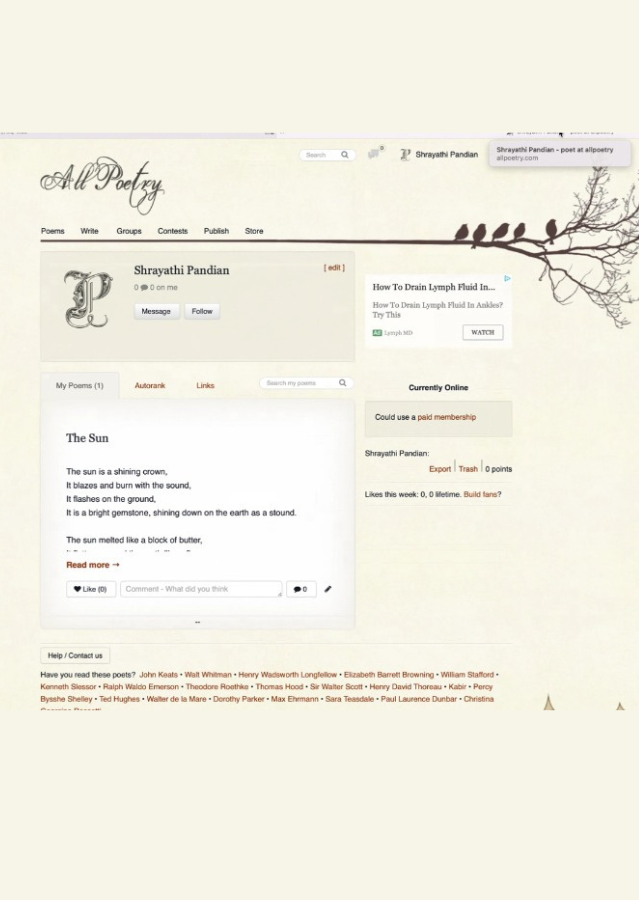
Student Achievements
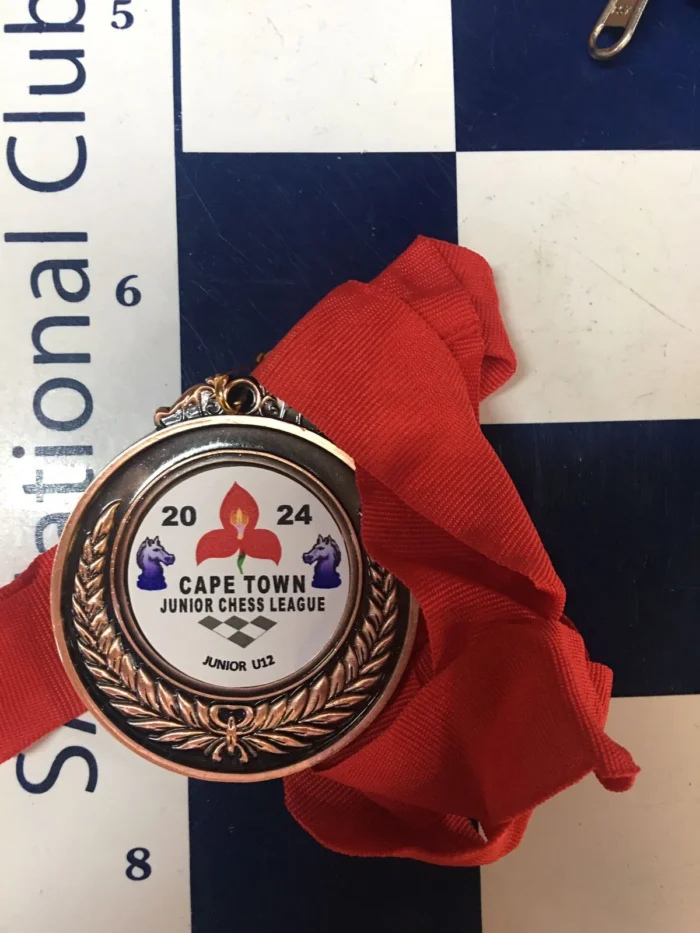
Making an Impact: 🏆 Student Achievements That Shine | 🌱 Your Growth. Our Mission.



What Our Parents Say About Us
👪 Real Results. Real Parent Voices. 🏆 Futures Built with Care

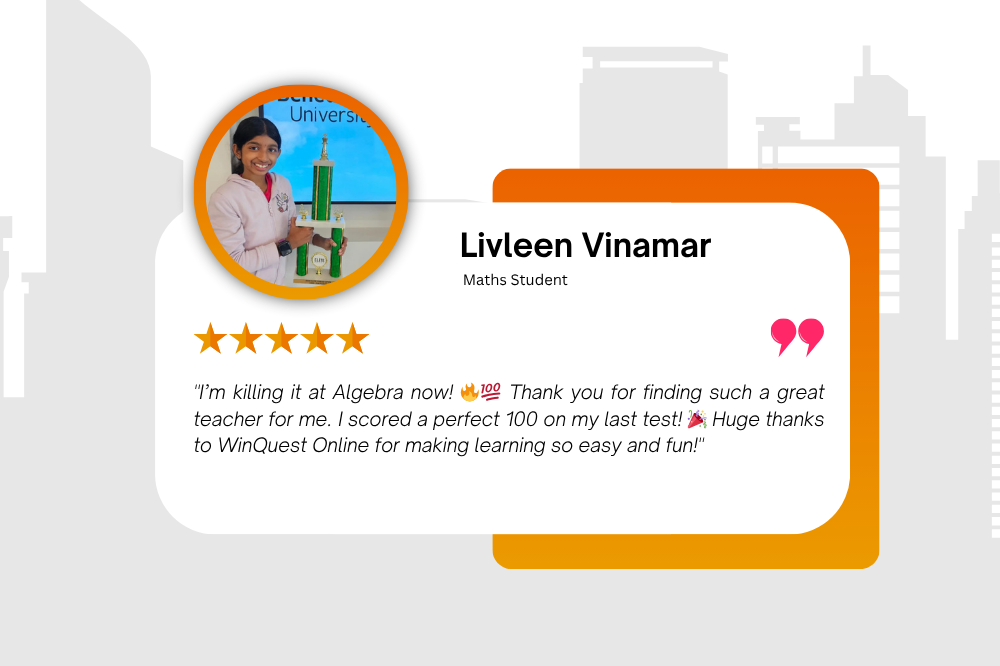
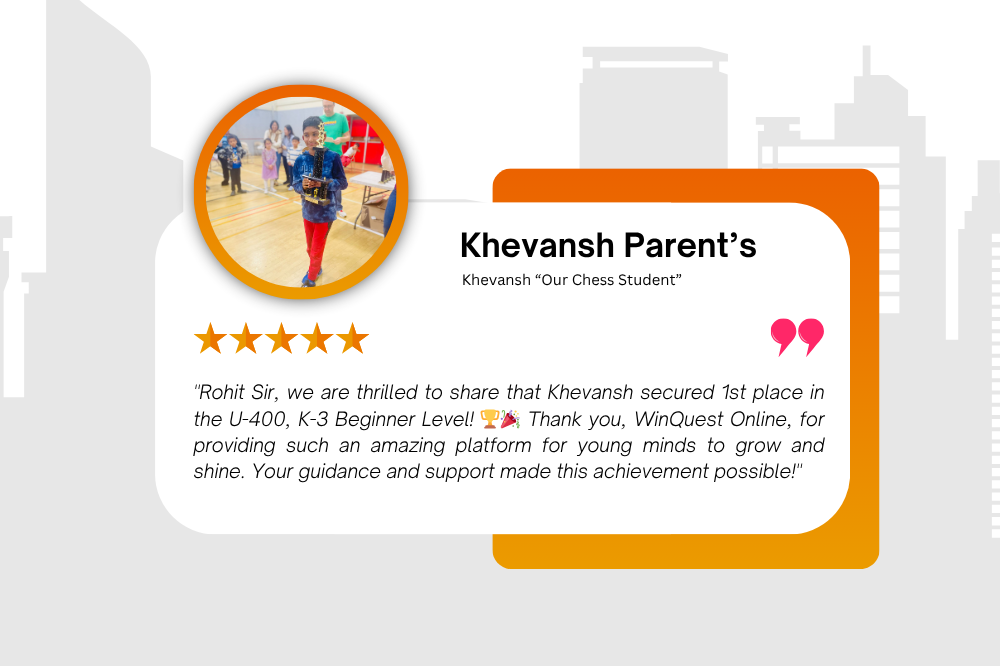
Parent Testimonials
Success Stories That Speak 🌟🎓 Wins That Inspire Pride 🏆
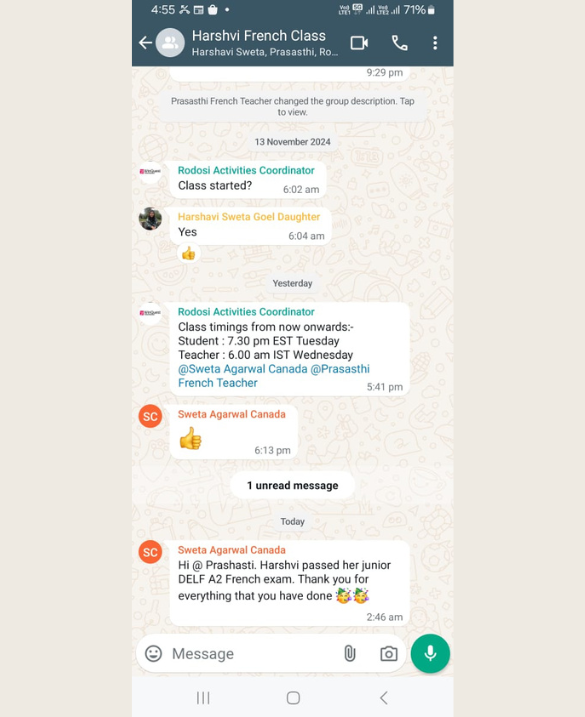
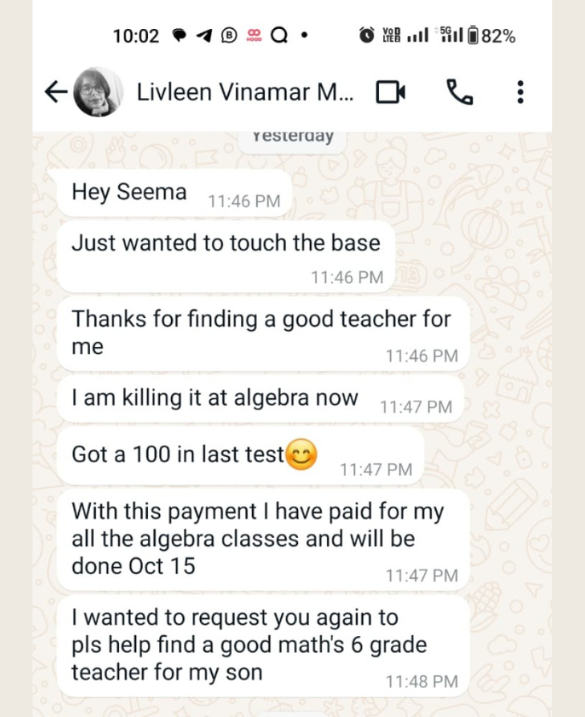
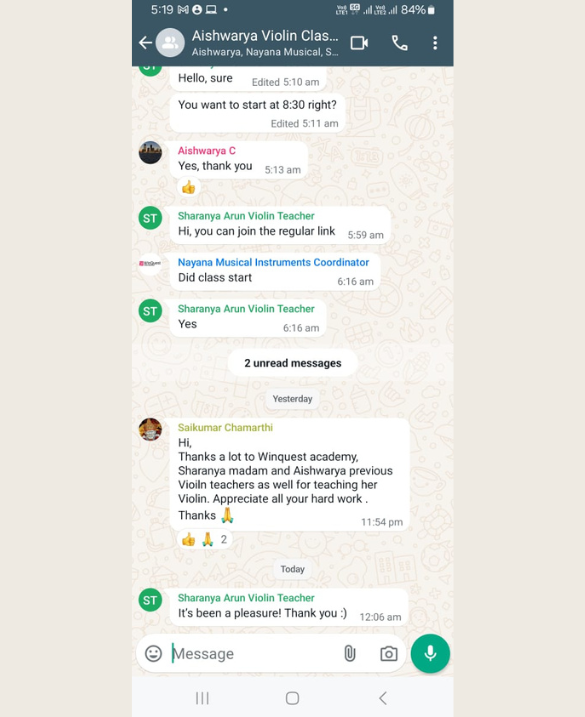
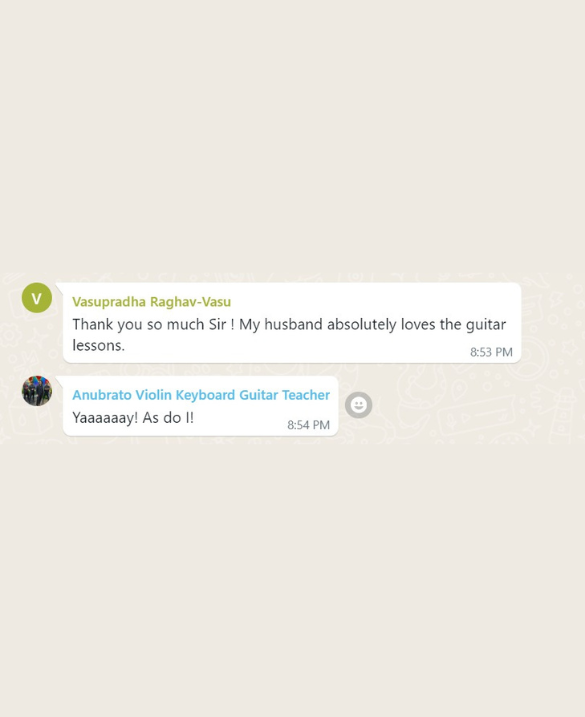
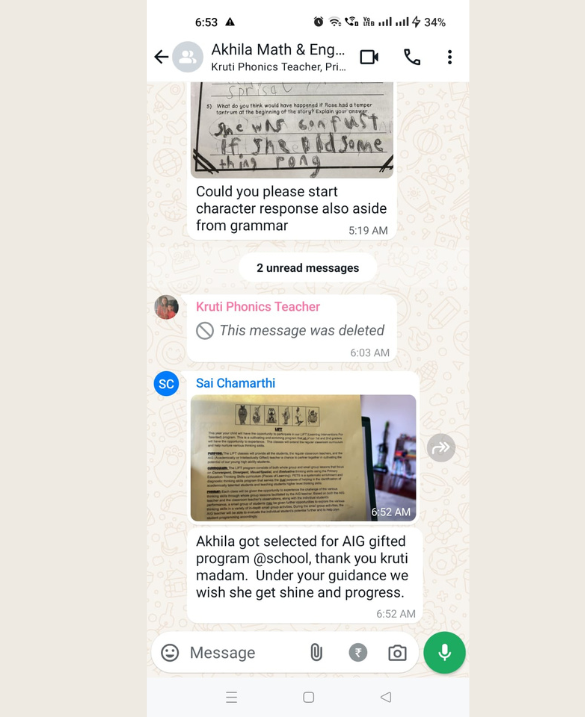
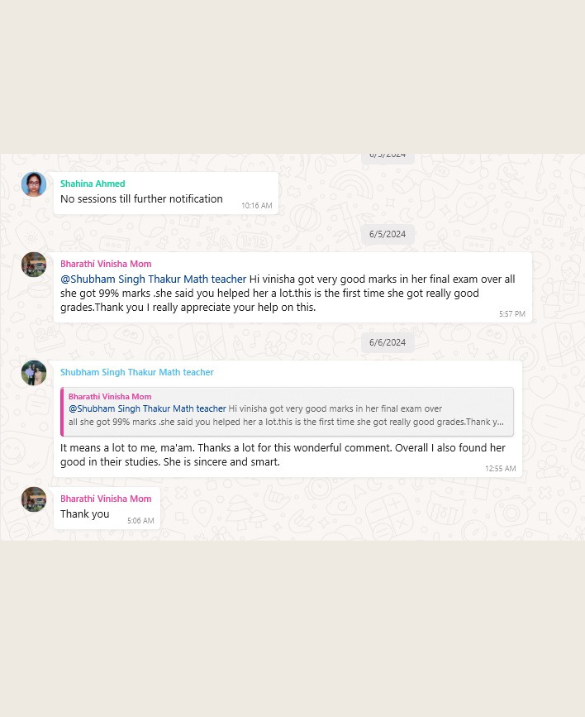
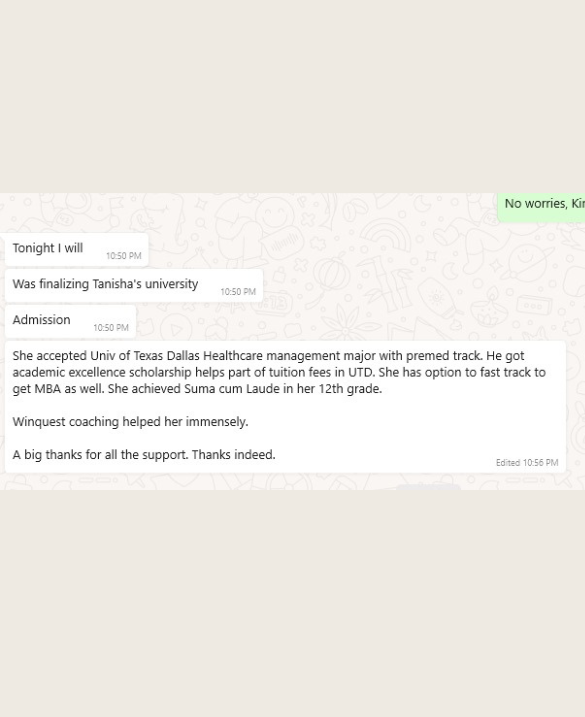
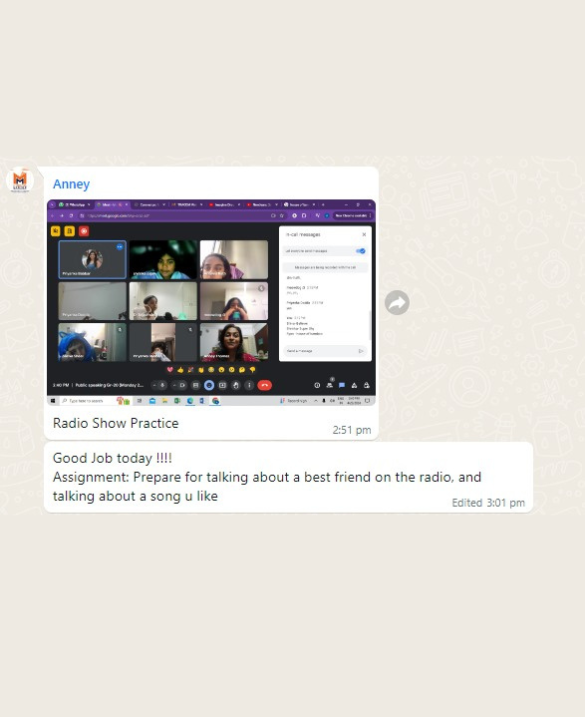
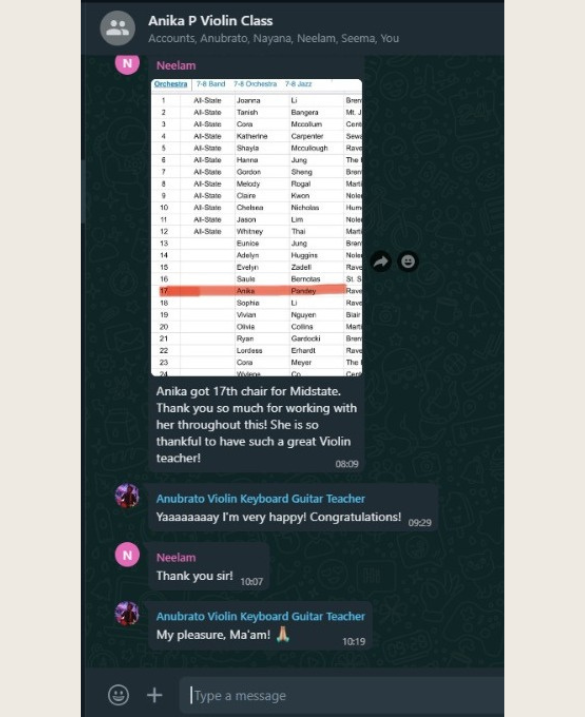
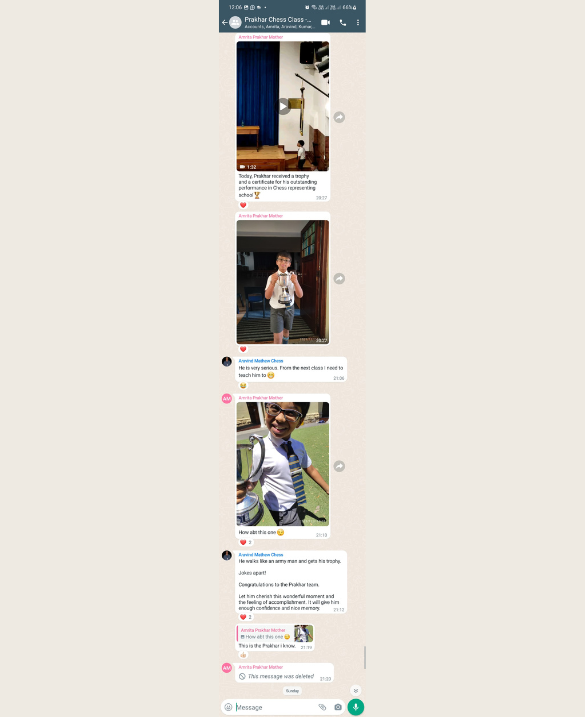
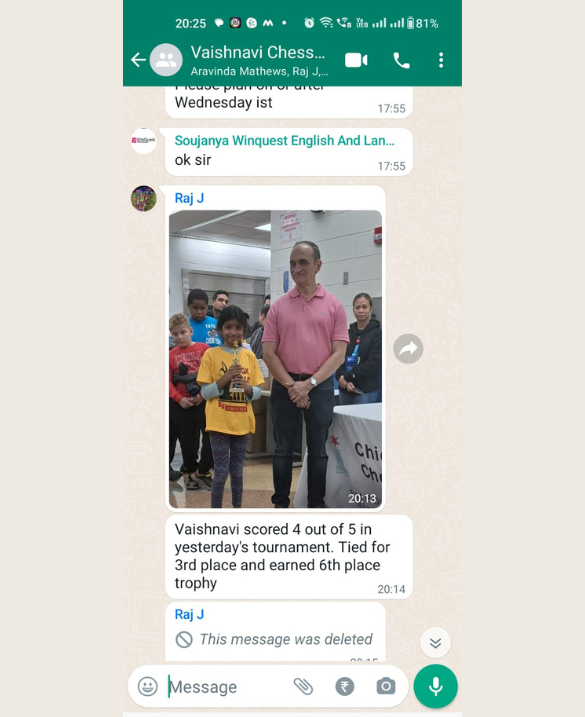
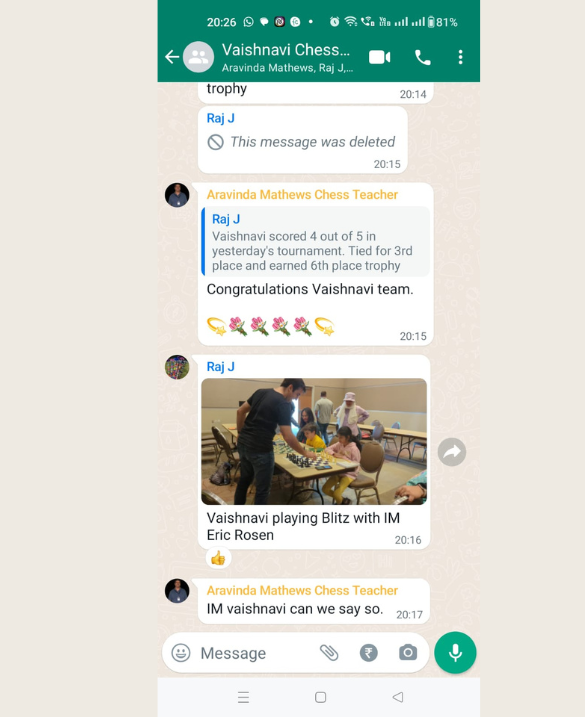
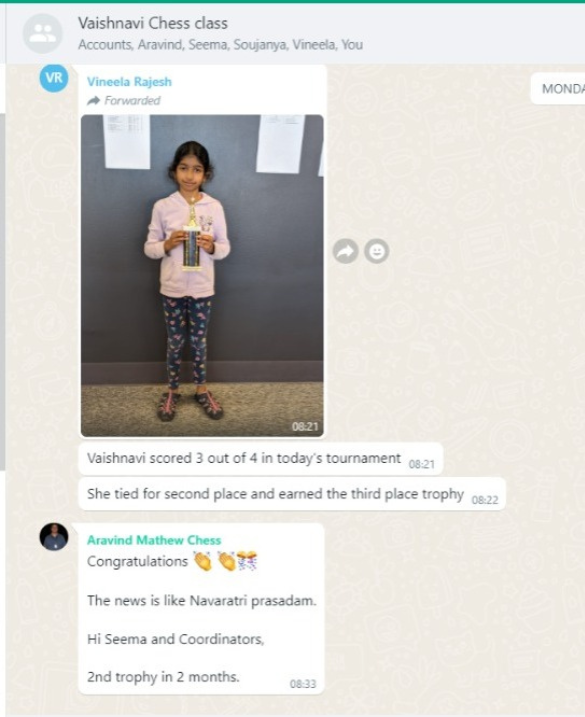
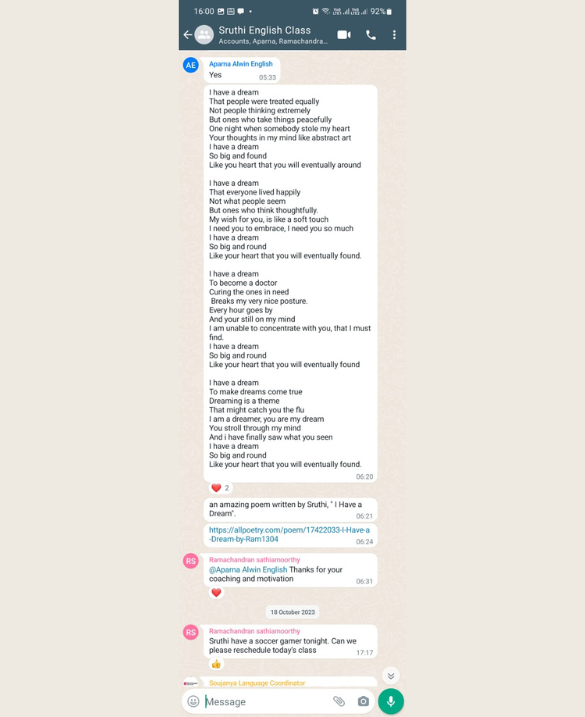
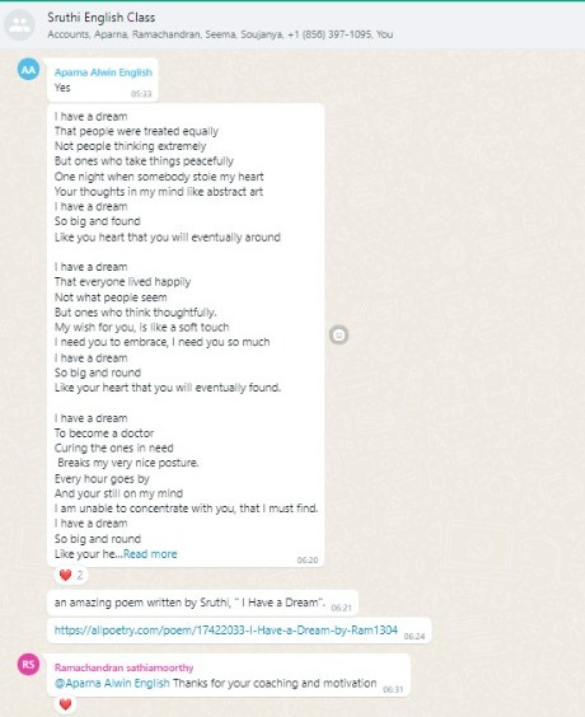
WhatsApp Testimonials
Real Voices from Our WhatsApp Community 💚📚
Latest News and Resources
📰 Learning Updates | 📘 Tips | 🎓 Resources | 💻 Online Courses